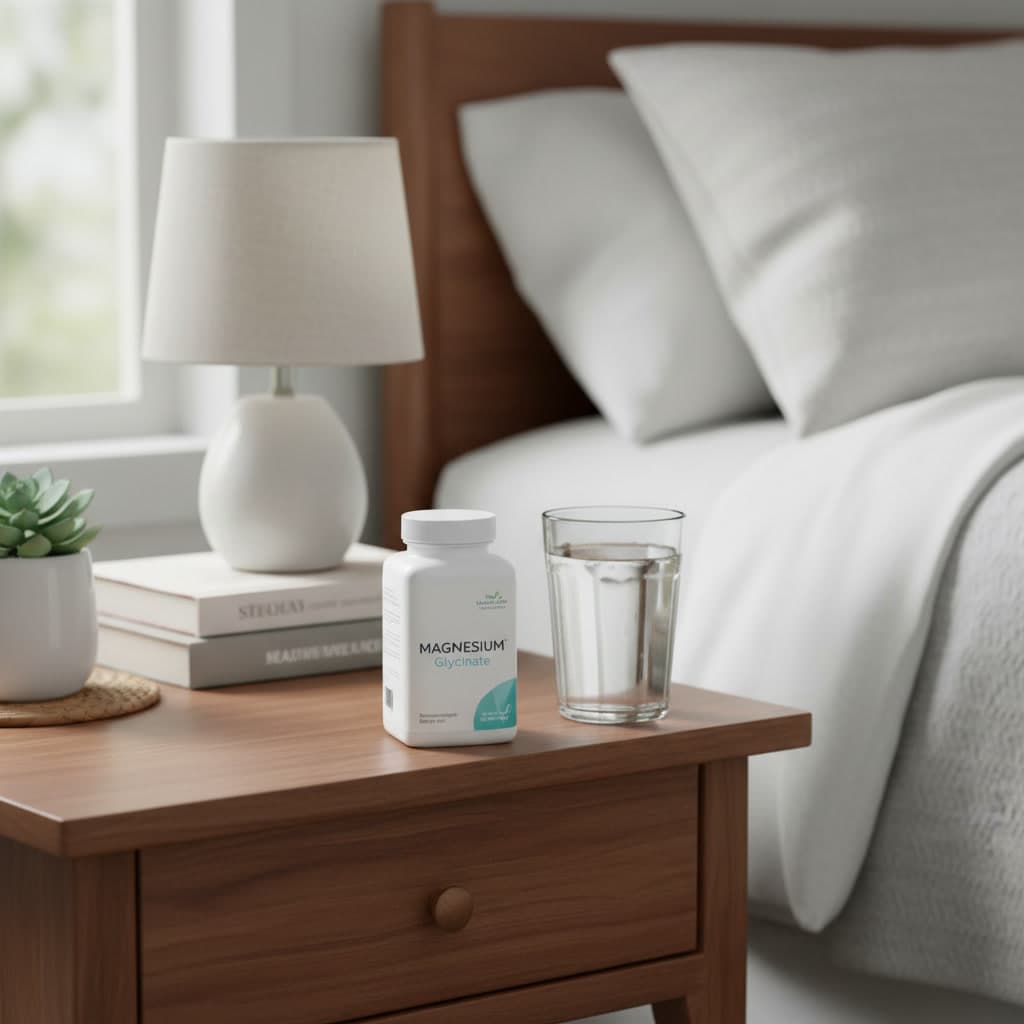
Magnesium Glycinate Benefits: Why This Supplement Is So Popular
Learn magnesium glycinate benefits for sleep, stress, muscle relaxation, and nervous system support—plus how to take it and beginner-friendly product picks.

Editorial Insight
Health Nutrition Hacks Team
Multidisciplinary nutrition editors + RDs
Our team of nutrition experts and health professionals dedicated to bringing you evidence-based nutrition advice.
Magnesium glycinate is one of the most popular beginner supplements for wind-down routines because many people find it gentle and easy to fit into a nightly habit. In this guide, you’ll learn what it is, how it compares to other magnesium forms, and how to use it responsibly.
Best for
Sleep routines, stress support, muscle relaxation
Beginner tip
Start low and stay consistent for 1–2 weeks
Watch-outs
Med interactions, kidney disease, pregnancy
Friendly reminder: This article is educational and not medical advice. If you’re pregnant, nursing, have kidney disease, or take medications, consult a qualified professional before using magnesium supplements.
What is magnesium (and what does it do)?
Magnesium is involved in many processes in the body, including muscle and nerve function, and helping make protein, bone, and DNA. [1] The NIH Office of Dietary Supplements also notes magnesium is a cofactor in 300+ enzyme systems and is required for energy production. [2]
If you’re building a beginner-friendly wellness routine, magnesium is often discussed because those roles connect to how you feel day-to-day (tension, stress resilience, sleep quality).
What is magnesium glycinate?
Magnesium glycinate is magnesium bound to glycine (an amino acid). Many people choose it because it tends to be a comfortable option for evening use.
Magnesium glycinate vs other forms (quick comparison)
Magnesium supplements come in different forms, and the form can affect tolerance and absorption. The NIH ODS notes some forms are more easily absorbed than others, including magnesium citrate, lactate, chloride, and aspartate. [1]
A simple way to think about common types:
- Glycinate: often chosen for calm/night routines (many people find it gentle)
- Citrate: commonly used for bowel regularity (can feel too strong for some)
- Oxide: often used for occasional constipation; may be less gentle for some people
Magnesium glycinate benefits (beginner-friendly)
May support relaxation and nervous system function
Magnesium supports normal muscle and nerve function, which is a common reason people add it to a wind-down routine. [1][2]
May support muscle comfort
Because magnesium is involved in muscle function and important transport processes, it’s commonly used for everyday muscle support (especially if stress or workouts leave you feeling tight). [2]
May support sleep routines indirectly
Magnesium isn’t a sedative, but supporting nerve and muscle function can be helpful as part of a bigger sleep routine that also includes consistent bedtime timing and lower evening light. [1][2]
Who should consider magnesium glycinate?
You might consider it if you:
- want a gentle nightly routine
- feel “wired but tired” in the evening
- notice muscle tightness after stress or exercise
Consider professional guidance first if you:
- have kidney disease
- are pregnant or nursing
- take medications that can interact with minerals [1]
How much magnesium do adults need? (RDA context)
NIH ODS lists recommended daily amounts (from all sources) for adults as: [1]
- Men: 400–420 mg/day
- Women: 310–320 mg/day
This helps keep expectations realistic: more isn’t automatically better.
When and how to take magnesium glycinate
A simple beginner approach:
- take it 30–60 minutes before bed
- take it with a small snack if your stomach is sensitive
- start with the lowest effective amount on the label
If you want a full routine, you can pair it with a short wind-down habit (example: stretching or slow breathing).
Common beginner mistakes
- taking a high dose immediately instead of starting low
- stacking multiple “calming” supplements at once (hard to know what helped)
- ignoring interactions: NIH ODS notes magnesium supplements can interact with some medications, and supplemental magnesium shouldn’t exceed the tolerable upper intake level unless advised by a professional [1]

Capsules vs powder
Capsules are best if you want:
- simple, no-mess dosing
- easy travel routine
Powder is best if you want:
- flexible dosing
- a warm “wind-down drink” habit
Magnesium glycinate product picks
Best overall capsule option
A popular chelated formula for beginners who want an easy nightly routine.
Mainstream beginner-friendly
Straightforward label and dosing, often chosen by first-time supplement users.
Simple well-known brand
A clean, no-fuss option many people use as a consistent nightly supplement.
Softgel format (easy swallow)
A softgel option some beginners prefer over larger tablets.
Practical takeaways for beginners
Build a simple habit
- • Pick a consistent time (30–60 minutes before bed)
- • Start low and track how you feel for 7–14 days
- • Keep the rest of your routine unchanged at first
Make it work better
- • Take with a small snack if sensitive
- • Avoid stacking multiple calming supplements right away
- • Pair with dim lights and a consistent bedtime
Night routine
Try this for 7 nights and track your sleep quality
Choose one product, take it consistently, and keep a simple note on how you feel each morning.
FAQ
What is magnesium glycinate best for?
+
Many beginners use it to support relaxation routines, sleep habits, and everyday muscle comfort.
Are some magnesium forms absorbed better than others?
+
Yes. NIH ODS notes forms such as magnesium citrate, lactate, chloride, and aspartate are more easily absorbed than some others. [1]
How much magnesium do adults need?
+
NIH ODS lists ~400–420 mg/day for men and ~310–320 mg/day for women from all sources. [1]
Can magnesium supplements interact with medications?
+
Yes. NIH ODS notes potential interactions and recommends caution and professional guidance when needed. [1]
References (source links)
Editorial Insight
Health Nutrition Hacks Team
Multidisciplinary nutrition editors + RDs
Our team of nutrition experts and health professionals dedicated to bringing you evidence-based nutrition advice.
Stay in the loop
Enjoyed this article?
Get more evidence-based nutrition tips, healthy recipes, and wellness advice delivered to your inbox every week.
We respect your privacy. Unsubscribe at any time.

Best Supplements for Energy Without Caffeine (No Jitters)
Boost energy without caffeine crashes. Beginner-friendly supplements that support steady energy, focus, and resilience—plus simple stacks and safety notes.
Read article